

Do Essential Oil Creams Stain Clothes? Prevention & Removal
Table of Contents
- Do Essential Oil Creams Actually Stain Clothes?
- Why Some Essential Oil Creams Leave Stains While Others Don't
- Which Essential Oils Are Most Likely to Leave Residue?
- How to Remove Essential Oil Stains From Clothes
- Essential Oil Absorption Time and Safe Application
- Preventing Stains When Using Oils in Your Laundry Routine
- Fabric-Specific Guidance: Which Materials Are Most Vulnerable
- Frequently Asked Questions
Last Updated: September 17, 2026
Do Essential Oil Creams Actually Stain Clothes?
Yes, essential oil creams stain clothes in some cases, but whether they actually will depends on several factors. The oils themselves, the carrier base, fabric type, and how quickly you treat the spot all play a role. At Healthy Embraces, we formulate our essential oil creams with non-greasy bases specifically designed to minimize residue, but understanding the science behind staining helps you use any oil cream safely.
The short answer: pure essential oils are more likely to leave marks than properly formulated creams. A quality essential oil cream absorbs into skin without leaving heavy residue on fabric. However, undiluted oils or poorly formulated products can absolutely stain sheets, clothing, and upholstery.
Think of it this way. Oil and water don't mix. When an oil-based product sits on fabric, it can either absorb, evaporate, or set permanently into the fibers. The outcome depends on what's actually in the cream and how long it stays wet.
Why Some Essential Oil Creams Leave Stains While Others Don't
The difference between a cream that stains and one that doesn't comes down to formulation chemistry. Not all essential oil products are created equal, and the base matters as much as the oils themselves.
Volatile vs. Non-Volatile Oils: The Key Difference
Volatile oils are the pure essential oils extracted from plants. These compounds evaporate quickly when exposed to air and have a strong aroma. Non-volatile oils are heavier, thicker oils that don't evaporate easily and tend to linger on surfaces.
Pure volatile essential oils like lemon, peppermint, and eucalyptus evaporate faster than non-volatile oils like coconut or jojoba. However, even volatile oils can leave marks if they're undiluted or if the fabric traps them before evaporation happens.
The key insight most people miss: a cream formulation changes the game entirely. When essential oils are blended into a proper cream base with emulsifiers and botanical extracts, they behave differently than pure oil alone. The carrier system controls how quickly the product absorbs and whether residue remains on fabric.
Healthy Embraces formulas use botanical bases that allow essential oils to penetrate skin without leaving heavy marks. Our Soothe Cream and Skin Support products are designed to absorb without that greasy coating that causes staining.
The Role of Carrier Oils in Fabric Saturation
Carrier oils are the base of any quality essential oil cream. Common carriers include coconut oil, jojoba oil, sweet almond oil, and shea butter. These ingredients deliver the essential oils to your skin, but they also determine how much residue stays on fabric.
Heavy carrier oils like coconut or cocoa butter take longer to absorb and are more likely to transfer onto clothing. Lighter carriers like jojoba or fractionated coconut oil absorb faster and leave less visible residue.
A well-formulated cream balances carrier oils with emulsifiers and absorbing agents. Emulsifiers help break down the oil molecules so they integrate with water-based ingredients. This process reduces the amount of pure oil sitting on the surface of fabric.
When you apply a quality cream, the formula should feel absorbed within a few minutes. If it still feels slick or oily after 10 minutes, it's either too heavy for your skin or not properly formulated for absorption.
Which Essential Oils Are Most Likely to Leave Residue?
Some essential oils stain more readily than others. Understanding which oils carry higher staining risk helps you choose products wisely.
Oils with strong pigmentation tend to leave visible marks. Oils like frankincense, myrrh, and helichrysum have darker color and thicker consistency. These are non-volatile compounds that don't evaporate quickly. If they're poorly diluted, they'll transfer to fabric.
Citrus oils like lemon, lime, and orange are volatile and evaporate faster, but they're also acidic. They can bleach or discolor certain fabrics if they sit undiluted on the material for too long.
Oils with resinous properties (frankincense, copaiba balsam, cistus) are sticky and slow to evaporate. These work beautifully in creams because the emulsified base prevents them from pooling on fabric. In pure form, they're problematic.
The safest oils for use near clothing are those that evaporate quickly and don't carry heavy pigmentation:
- Peppermint
- Lavender
- Eucalyptus
- Spruce
- Lemon (in diluted form)
Products like Healthy Embraces Breathe Free Respiratory Comfort Cream blend volatile oils with proper emulsifiers, so the eucalyptus and peppermint deliver their benefits without leaving marks.
How to Remove Essential Oil Stains From Clothes
If an oil stain does happen, the removal method depends on whether you catch it fresh or after the dryer has heat-set it. Early action makes a dramatic difference.
Soothe Cream - Comfort for Dry →
Step-by-Step Stain Removal for Fresh Spills
Act immediately. The longer an oil sits on fabric, the deeper it penetrates the fibers.
Step 1: Blot, don't rub. Use a white paper towel or cloth to absorb excess oil. Press gently onto the stain. Rubbing spreads the oil into more fibers and pushes it deeper.
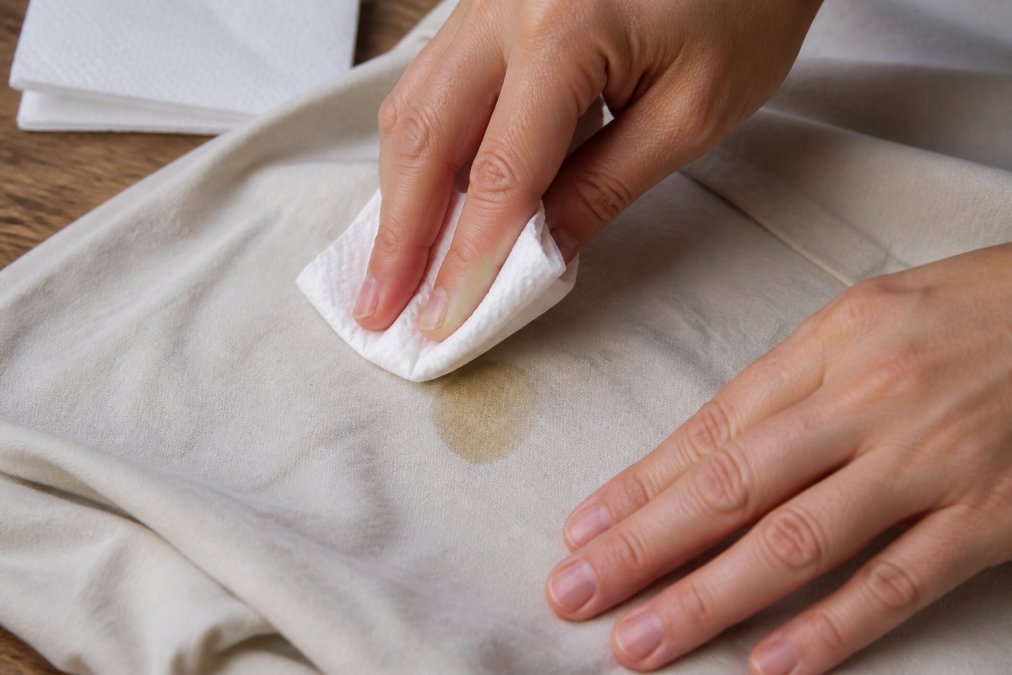
Step 2: Apply an absorbent powder. Sprinkle baking soda, cornstarch, or talc powder directly onto the wet stain. These powders absorb oil molecules and prevent the stain from setting. Let it sit for 15-30 minutes.
Step 3: Brush off the powder. Use a soft brush or cloth to remove the dried powder. The oil should come away with it.
Step 4: Pre-treat with a degreaser. Apply a small amount of dish soap directly to the remaining stain. Dish soap is an emulsifier designed to break down oil. Work it gently into the fabric with a soft brush.
Step 5: Rinse with cold water. Cold water prevents the oil from setting further. Hot water opens fabric fibers and allows oil to penetrate deeper. Rinse thoroughly until soap residue is gone.
Step 6: Wash in cold water. Use your regular laundry detergent and wash the item in cold water. Check the stain before drying. If any mark remains, repeat the pre-treatment. Never put the item in the dryer until the stain is completely gone.
Removing Heat-Set Oil Stains After the Dryer
Heat makes oil stains permanent. The dryer's warmth causes oil to bond chemically with fabric fibers. Removal is harder but not impossible.
For heat-set stains, you need stronger degreasing action. Start with a commercial enzyme cleaner designed for grease removal. Enzyme cleaners break down the molecular bonds between oil and fabric.
Apply the enzyme cleaner directly to the stain and let it sit for the time recommended on the product label, usually 30 minutes to several hours.
Essential Oil Absorption Time and Safe Application
Understanding how long it takes for an essential oil creams stain clothing or bedding helps you avoid transfer through proper absorption timing.
The absorption time depends on several factors:
- Amount applied: More product takes longer to absorb. Use a small amount, about a dime-sized portion per application area.
- Skin type: Dry skin absorbs cream faster than oily skin. Sensitive skin may need lighter formulas.
- Carrier oil composition: Lighter oils absorb faster than heavy butters.
- Body location: Thin-skinned areas like the neck absorb faster than thick-skinned areas like heels.
Preventing Stains When Using Oils in Your Laundry Routine
Some people add essential oils directly to laundry for scent and benefits. This is risky if not done correctly.
| Prevention Method | Effectiveness | Best For |
|---|---|---|
| Timing (15+ min before contact) | Very High | Daily use with creams |
| Light application (small amounts) | High | Neck and shoulder creams |
| Cold-water washing | High | Treating fresh accidents |
| Enzyme cleaners | Moderate | Heat-set stains |
| Dry cleaning | Very High | Stubborn or large stains |
Fabric-Specific Guidance: Which Materials Are Most Vulnerable
Some fabrics stain more easily than others. Natural fibers tend to absorb and hold oil longer than synthetics.
Frequently Asked Questions
Will essential oil creams leave permanent stains on fabric?
Essential oil creams can stain clothes, but the permanence depends on the oil concentration, fabric type, and how quickly you treat the stain. Fresh spills on synthetic fibers often wash out with prompt treatment using dish soap and cold water. However, natural textiles like cotton and linen absorb oil-based residue more readily, and heat from the dryer can set stains permanently. Acting fast before washing and drying is critical to preventing permanent marks.
How long does it take for essential oil creams to absorb into skin before getting dressed?
Most quality essential oil creams absorb within 5 to 15 minutes, depending on the formulation and your skin type. Lighter, non-greasy formulas like those from Healthy Embraces are designed to absorb quickly without leaving residue. To be safe, wait at least 10 minutes before putting on clothes, longer for thicker applications or if you have naturally oily skin. This absorption time allows the cream to settle into your skin rather than transferring to fabric.
Which essential oils are most likely to stain clothes?
Oils with high pigmentation and low evaporation rates stain most readily. Darker oils like Frankincense, Myrrh, and Helichrysum have stronger colorfastness and leave visible marks on light fabrics. Citrus oils (Lemon, Orange, Lime) and Peppermint are volatile compounds that evaporate quickly, so they're less likely to leave permanent stains. Carrier oils, the base in creams, also matter; coconut and jojoba oils have higher saturation rates and contribute to staining risk.
Can I use hot water to remove an essential oil stain from clothes?
No, hot water is counterproductive. High temperatures increase evaporation and can set oil-based stains permanently into fabric fibers. Always use cold water for initial treatment and pre-soaking. Cold water helps prevent the oil from bonding deeply to the textile. After you've treated the stain with cold water and a degreasing agent like dish soap or enzymatic cleaner, you can use warm (not hot) water for the final wash cycle.