

Why Botanical Lotions for Sensitive Skin Work
Table of Contents
- What Makes Botanical Lotions Different for Sensitive Skin
- Natural Ways to Soothe Dry Skin Without Harsh Additives
- How to Identify Skin Irritants in Lotions Before You Buy
- Essential Oils for Sensitive Skin Safety: What to Know
- Seasonal Skin Care Routines for Reactive Skin
- Choosing a Botanical Lotion for Sensitive Skin
- Frequently Asked Questions
Last Updated: September 13, 2026
What Makes Botanical Lotions Different for Sensitive Skin
Botanical lotions are moisturizers built on plant-derived oils, butters, and extracts instead of petrolatum, mineral oil, or synthetic fragrance, a distinction that matters for reactive skin.
Healthy Embraces offers a collection of handcrafted, essential oil-infused creams designed to support your everyday comfort and well-being. Plant-based formulas often include three ingredient classes:
- Emollients (jojoba, shea butter, squalane) fill the gaps between skin cells so the surface feels smooth instead of tight
- Humectants (glycerin, aloe, honey) pull water into the upper layers of the skin
- Occlusives (beeswax, plant waxes) slow water from escaping once it's there
Most drugstore lotions lean heavily on occlusives, which seal moisture in but can trap irritants against a compromised barrier. Botanical formulas balance all three.
How Plant-Based Emollients Support the Skin Barrier
Your skin barrier is the outermost layer of the epidermis, skin cells held together by lipids. When those lipids break down, water escapes through transepidermal water loss, and irritants get in more easily.
Plant oils high in linoleic acid, such as sunflower and safflower, absorb quickly and help rebuild that lipid matrix. Oils high in oleic acid, like olive and avocado, sit heavier and suit very dry, flaky skin better.
Natural Ways to Soothe Dry Skin Without Harsh Additives
The fastest relief for itchy, flaky skin comes from a few low-effort habits that stop the irritation cycle early.
Oatmeal Baths, Humidifiers, and Gentle Cleansing
Colloidal oatmeal is one of the few natural ingredients with genuine regulatory standing as a skin protectant in the U.S., forming a thin film that reduces friction and holds water against the skin. A lukewarm bath with finely ground oats calms itchy skin without stripping it. A humidifier in the bedroom also keeps indoor humidity in a barrier-supporting range overnight.
Cleansing is where most people undo their own progress:
- Use lukewarm water, not hot. Hot water dissolves the lipids your barrier needs
- Choose a gentle cleanser with a low-surfactant formula, or plain water on non-sweaty days
- Pat dry, don't rub, and apply moisturizer within three minutes while skin is still damp
- Skip dry brushing and loofahs on reactive areas entirely
How to Identify Skin Irritants in Lotions Before You Buy
The most reliable way to avoid a reaction is to read the ingredient list before the product touches your skin. Fragrance and preservatives cause most cosmetic contact reactions, and both hide behind vague labeling.
Reading Labels: Synthetic Fragrances, Parabens, and Alcohols
Under FDA labeling rules, a product can list "fragrance" or "parfum" as a single ingredient without disclosing the blend inside. The same applies to "natural fragrance," which is not a regulated term.
Here's what to scan for and why:
| Label Term | What It Usually Means | Why It Matters for Reactive Skin |
|---|---|---|
| Fragrance / Parfum | Undisclosed blend, often 10+ compounds | Leading cause of contact reactions |
| Denatured alcohol | Solvent for fast drying | Strips lipids, worsens dryness |
| Parabens | Preservative family | Some users report irritation |
| Essential oil blend | Plant-derived scent compounds | Natural, but still potential allergens |
| "Hypoallergenic" | No standardized definition | Marketing term, not a guarantee |
| Methylisothiazolinone (MI) | Preservative in many "gentle" formulas | A common cause of allergic contact dermatitis |
| Propylene glycol | Humectant and penetration enhancer | Can sting compromised skin |
The term hypoallergenic has no legal definition in the U.S. cosmetic market, so treat it as a claim rather than a certification. If a brand won't list every essential oil by name, that's your answer.
Irritation vs. Allergy: Why the Distinction Changes Your Strategy
Most people use "sensitive skin" as a catch-all, but two mechanisms are usually at work, and they call for different responses.
Irritant contact dermatitis is direct chemical injury to the skin barrier. It doesn't involve the immune system, can happen on first exposure, and stays confined to the area where the product touched. Strong surfactants, high-concentration acids, and repeated wet-dry cycles are common triggers. The fix is removing the product plus barrier repair.
Allergic contact dermatitis is an immune response requiring prior sensitization. You can use a product for months, then react; once sensitized, even tiny amounts can trigger a flare that spreads beyond the application site. Fragrance mixes, preservatives like MI, and essential oil components (notably cinnamal and limonene) are frequent culprits.
A Practical Patch-Test Protocol
Patch testing at home won't replace a dermatologist's TRUE test panel, but it can catch obvious reactions before a full-body application.
- Apply a small amount to the inner forearm, about the size of a dime
- Leave it uncovered and don't wash the area for 24 hours
- Check for redness, itching, or bumps at 24 hours
- Recheck at 48 hours before applying anywhere else
- If you're testing a new product, test one at a time, not three in a week
- For leave-on products, repeat the test on the upper arm or behind the ear, where skin is thinner
A reaction within minutes is usually irritation; one appearing 24 to 72 hours later is more likely allergic. Either way, stop using the product and note the ingredients for future purchases.
Cumulative Exposure: The Slow Build
One application of a mildly irritating ingredient rarely causes a visible problem, the trouble comes from layering. A fragrance-containing cleanser, scented moisturizer, perfumed body wash, and fragranced laundry detergent all contribute to the same reactive load, so when skin flares it's hard to identify which product pushed it over.
A common approach is to strip the routine to the fewest possible fragrance-free products for two weeks, then reintroduce one item at a time, tedious, but the only reliable way to isolate a trigger without a dermatologist's patch panel.
If you want to go deeper on how the FDA regulates cosmetic labeling and what claims brands can legally make, the FDA's cosmetic labeling guidance is worth reading before your next purchase.
Essential Oils for Sensitive Skin Safety: What to Know
Essential oils are concentrated plant compounds, and concentration makes them both effective and risky. A few drops of lavender in a carrier cream is generally well tolerated; the same oil applied neat can cause irritation or sensitization.
Dilution Math That Actually Works
Dilution is measured in drops of essential oil per ounce of carrier. For sensitive skin, start at roughly 1%, about 6 drops per ounce of cream or carrier oil. Therapeutic-grade oils are not exempt; purity affects quality, not safety threshold.
A quick reference for adults with reactive skin:
| Dilution | Drops per oz of carrier | Best for |
|---|---|---|
| 0.5% | ~3 drops | Facial skin, first-time users |
| 1% | ~6 drops | Sensitive body skin, daily leave-on |
| 2% | ~12 drops | Short-term targeted use, non-facial |
| 3%+ | ~18+ drops | Not recommended for reactive skin |
These figures assume standard 20-drop-per-milliliter droppers. If yours differs, measure rather than guess, overconcentrating a homemade blend is a common cause of self-inflicted contact dermatitis.
Why Some Oils Sensitize and Others Don't
Sensitization is an immune response to specific molecules in an oil, not the oil as a whole. The main offenders fall into a few chemical families:
- Aldehydes (cinnamal in cinnamon, citral in lemongrass), among the most common fragrance allergens
- Phenols (eugenol in clove, thymol in thyme), strong irritants even at low dilution
- Furocoumarins (bergapten in bergamot, other citrus), phototoxic, meaning they react with UV light
- Oxidized terpenes (limonene and linalool after exposure to air), the oxidized form is far more sensitizing than the fresh form
That last point is the one most guides miss. Limonene and linalool are naturally present in many citrus and floral oils and aren't problematic when fresh. But as a bottle ages and is exposed to air and light, they oxidize into hydroperoxides far more likely to trigger allergic contact dermatitis, an old bottle of citrus oil can cause a reaction the same oil never caused when new. Store essential oils in dark glass, keep them capped, and replace citrus oils within a year.
Phototoxicity vs. Irritation: Different Problems, Different Fixes
Phototoxic oils, most cold-pressed citrus, plus bergamot, rue, and fig leaf absolute, only react when treated skin is exposed to UV light, sometimes producing a burn-like reaction that can leave dark marks for months. Bergapten-free ("FCF") versions of bergamot and lime exist for this reason.
Irritant oils cause a reaction on contact regardless of sun exposure. Cinnamon, clove, oregano, and thyme are the usual suspects, avoid them entirely on reactive skin, not just dilute further.
Gentler starting points include lavender, frankincense, chamomile, and helichrysum, but "gentle" is relative. Any oil can sensitize a given person, which is why patch testing matters more than any list.
Patch Testing Takes Two Days
Patch testing takes two days and costs nothing:
- Apply a small amount to the inner forearm, about the size of a dime
- Leave it uncovered and don't wash the area for 24 hours
- Check for redness, itching, or bumps at 24 hours
- Recheck at 48 hours before applying anywhere else
- If you're testing a new product, test one at a time, not three in a week
If you're testing a single oil rather than a finished product, dilute it to your intended use concentration first. Testing a neat oil tells you nothing about how the diluted version will behave.
For clinical guidance on managing reactions to cosmetic ingredients, the American Academy of Dermatology's guidance on contact dermatitis is a useful starting point.
Seasonal Skin Care Routines for Reactive Skin
Skin that reacts badly in January often behaves differently in July, and a routine that ignores that shift keeps you chasing flare-ups. Winter's cold air and dry indoor heat pull water from skin; summer brings humidity, sweat, and sun. Adjust three things as seasons change: moisturizer weight, cleansing frequency, and exfoliation. Winter calls for a richer cream applied twice daily; summer often suits a lighter layer in the morning and a full application at night. Cut exfoliation to once a week or less during any flare.
Choosing a Botanical Lotion for Sensitive Skin
The best botanical lotion for sensitive skin has a short, fully disclosed ingredient list, no synthetic fragrance, and a balance of emollients and humectants rather than a wall of petrolatum.
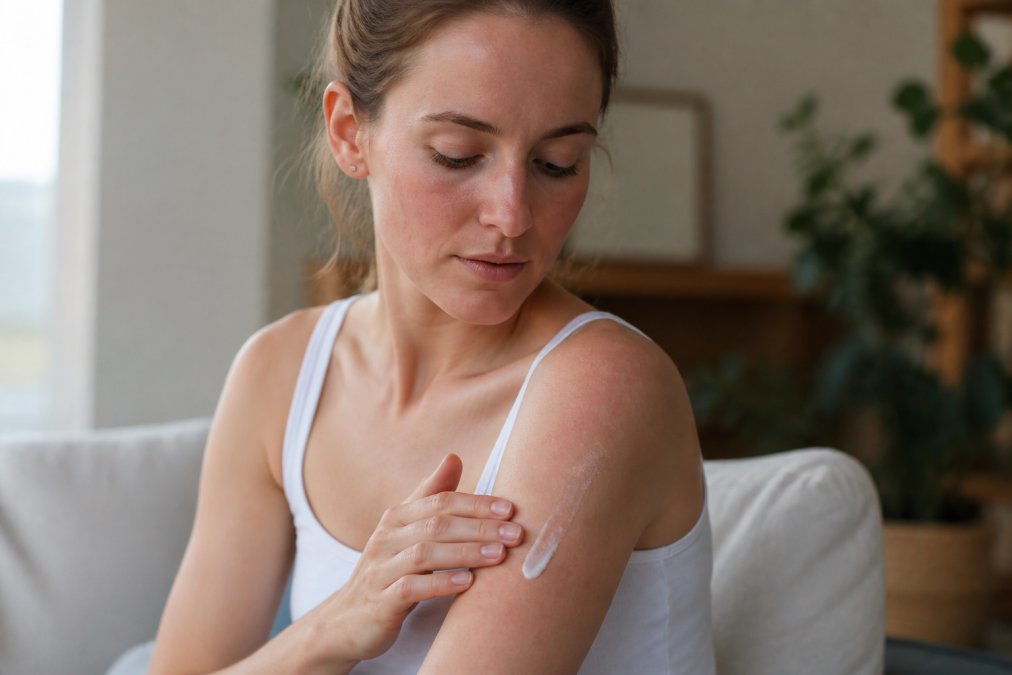
Healthy Embraces makes this easy to evaluate because every formula lists its essential oils by name. Our Soothe Cream pairs rich botanical moisture with comforting aromatherapy for dry, itchy-feeling skin, with no parabens and no synthetic fragrance. The Skin Support Cream is thoughtfully crafted for people who want gentle, nourishing care for skin that feels dry, rough, tight, or stressed by everyday life, while Chronic Skin Support is made for persistent dry, rough, flaky, or uncomfortable skin. All three are handcrafted in small batches, cruelty-free, and priced at $26.95.

If you're weighing options, judge them on four things:
- Ingredient transparency: every oil and preservative named
- Emollient-to-occlusive balance: plant oils near the top, not petrolatum
- Fragrance status: fragrance-free or fully disclosed essential oils
- Texture: non-greasy enough to wear under clothing or on sheets
For more on how the FDA regulates cosmetic labeling and what claims brands can legally make, the FDA's cosmetic labeling guidance is worth reading before your next purchase. The American Academy of Dermatology's guidance on dry skin care also covers bathing temperature and moisturizing frequency in more clinical detail.
Dry, reactive skin is a moving target, and most drugstore lotions treat it as a one-time problem solved by a single heavy cream. Healthy Embraces approaches it differently: small-batch botanical formulas with pure essential oils listed by name, no parabens, no synthetic fragrance, and a non-greasy texture you can wear under work clothes or on your sheets. Every order is backed by a 90-day satisfaction guarantee and a freshness guarantee. Get started with Healthy Embraces and give your skin a routine it doesn't have to fight.
Frequently Asked Questions
What are the benefits of using botanical ingredients on sensitive skin?
Botanical ingredients like plant-based emollients and humectants help hold water in the skin and support the skin barrier, which can reduce transepidermal water loss. Many botanical lotions skip synthetic fragrances and parabens that commonly trigger reactions. Ingredients such as colloidal oatmeal, shea butter, and jojoba are well tolerated by most people with sensitive skin. Always patch test a new product on your inner forearm for 24 hours before using it widely.
How do botanical lotions differ from synthetic moisturizers?
Synthetic moisturizers often rely on petrolatum, silicone, or synthetic fragrance to seal in moisture. Botanical lotions use plant oils, butters, and essential oils instead. That difference matters for sensitive skin because synthetic fragrances are a leading cause of contact dermatitis. Botanical formulas also tend to include antioxidants and essential fatty acids that support the skin barrier. The trade-off is that natural ingredients can still cause reactions, so label reading and patch testing remain important.
Are essential oil-infused lotions safe for reactive skin types?
Not all essential oils suit reactive skin. Some, like lavender and chamomile, are generally well tolerated when diluted properly. Others, including citrus and peppermint, can irritate sensitive skin. The key is dilution: essential oils should make up a small percentage of the finished lotion. If you have a diagnosed skin condition, ask a dermatologist before using essential oil products. Start with a patch test on a small area and wait 24 hours before applying more broadly.
How do plant-based emollients support the skin barrier?
Plant-based emollients like shea butter, jojoba, and sunflower oil fill the gaps between skin cells in the epidermis. This helps slow transepidermal water loss and keeps irritants from penetrating. Some botanical ingredients also supply essential fatty acids and antioxidants that support the skin's natural repair process. Used consistently after bathing, while skin is still damp, these emollients can reduce flaky skin and itchy skin over time.