

Botanical Skincare for Sensitive Skin: A Complete Guide
Table of Contents
- Why Botanical Skincare Works for Sensitive Skin Types
- Soothing Botanical Ingredients for Sensitive Skin
- Ingredients to Avoid in Botanical Products
- How to Patch Test Botanical Skincare Safely
- Natural Ways to Soothe Dry Skin with Botanicals
- Building Your Sensitive Skin Routine with Botanical Care
- Understanding Skin Barrier Health and Plant-Based Solutions
- Addressing Specific Conditions: Eczema, Rosacea, and Chronic Dryness
- Frequently Asked Questions
Last Updated: September 24, 2026
Why Botanical Skincare Works for Sensitive Skin Types
Sensitive skin demands a different approach. When your skin barrier feels compromised, reacts to fragrance, or flares up after common moisturizers, botanical skincare sensitive skin offers a gentler alternative built on plant-based compounds rather than synthetic chemicals.
Botanical extracts contain naturally occurring compounds that support skin barrier repair and reduce inflammation at a molecular level. Unlike synthetic fragrances and harsh preservatives, pure plant-based lipids and phytonutrients work with your skin's natural chemistry instead of against it.
The core advantage lies in what botanical skincare doesn't include: no synthetic fragrance, no parabens or sulfates, no harsh surfactants stripping away ceramides. This absence of common irritants matters especially for anyone whose skin has reacted badly to "natural" products containing problematic additives.
Soothing Botanical Ingredients for Sensitive Skin
Anti-inflammatory Extracts That Calm Irritation
The most effective botanical skincare for sensitive skin types relies on extracts with anti-inflammatory properties. Lavender, chamomile, and helichrysum stand out because they contain compounds that actively reduce redness and calm reactive skin.
Copaiba balsam supports natural healing. Frankincense has been used for centuries and modern research supports its ability to enhance skin elasticity and calmness, making these reliable choices for irritated or inflamed skin.
Cape chamomile delivers soothing properties. Peppermint provides cooling relief but should be used cautiously if your skin is extremely reactive.
Not all botanical extracts are equally gentle, some plant compounds can irritate sensitive skin. This is why patch testing becomes essential before committing to any new botanical product.
Plant-Based Lipids and Barrier-Repair Compounds
Your skin barrier is a lipid-rich structure. When compromised, water escapes and irritants penetrate, creating the dry, reactive cycle sensitive skin experiences. Botanical skincare for sensitive skin types must include plant-based lipids that restore this barrier, not just moisturize the surface.
Ceramide-rich plant oils from seeds and nuts directly support barrier repair.
Botanical wax esters provide occlusive protection, sealing in hydration.
When selecting botanical skincare, check the ingredient list for plant-based lipids listed in the first five ingredients. If the formula relies primarily on water and fragrance with minimal lipid content, it won't adequately support barrier repair for sensitive skin.
Ingredients to Avoid in Botanical Products
Synthetic fragrance remains a common irritant. Essential oils can irritate sensitive skin if used above certain concentrations.
Plant-derived surfactants still strip away protective lipids.
Soothe Cream - Comfort for Dry →
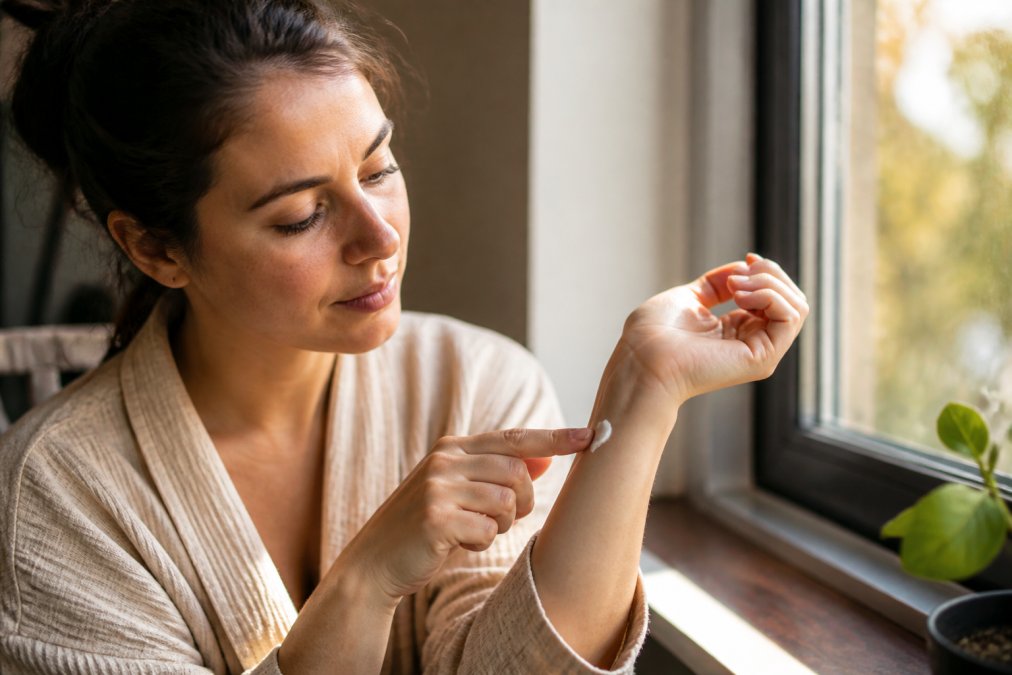
How to Patch Test Botanical Skincare Safely
Natural Ways to Soothe Dry Skin with Botanicals
Dry, sensitive skin requires barrier repair and sustained moisture retention through three mechanisms: hydration, occlusion, and barrier support.
| Botanical Ingredient | Primary Function | Best For |
|---|---|---|
| Lavender | Anti-inflammatory, calming | Irritated, reactive skin |
| Plant-based ceramides | Barrier repair | Dry, compromised barriers |
| Copaiba balsam | Deep skin support | Chronic dryness |
| Chamomile extract | Soothing, redness reduction | Inflamed sensitive skin |
| Plant-derived squalane | Lightweight occlusion | Sensitive skin that rejects heavy creams |
| Helichrysum | Antioxidant, calming | Aging sensitive skin |
Building Your Sensitive Skin Routine with Botanical Care
A successful botanical skincare routine for sensitive skin types follows a logical sequence that doesn't overwhelm your barrier with too many actives or irritants.

Understanding Skin Barrier Health and Plant-Based Solutions
Your skin barrier, technically called the stratum corneum, is a lipid-rich layer that protects against irritants and prevents water loss. When this barrier is compromised, sensitive skin becomes the inevitable result. Botanical skincare for sensitive skin types works because it directly supports barrier health.
Addressing Specific Conditions: Eczema, Rosacea, and Chronic Dryness
Different sensitive skin conditions require slightly different botanical approaches, though the foundational principles remain consistent.
Frequently Asked Questions
Are essential oils safe for sensitive skin types?
Essential oils can be safe for sensitive skin when properly diluted and formulated into botanical skincare products. Pure, undiluted essential oils should never be applied directly to skin, as they can cause irritation or sensitization. Look for products where therapeutic-grade essential oils are blended into a moisturizing base with plant-based lipids and soothing extracts. Always patch test first, even with diluted formulations, since individual sensitivities vary. Products specifically designed for sensitive skin undergo formulation testing to ensure the oil concentration and supporting ingredients work together to calm rather than irritate.
What are the best botanical ingredients for soothing sensitive skin?
Soothing botanical ingredients include chamomile (anti-inflammatory and calming), lavender (reduces redness and supports skin comfort), frankincense (supports skin barrier repair), helichrysum (antioxidant-rich and gentle), and copaiba balsam (naturally soothing). Plant-based lipids like plant milk and wax esters can help restore the skin barrier and reduce transepidermal water loss. Cold-pressed oils such as jojoba and rosehip provide emollient and humectant properties. Look for products that combine multiple extracts, a blend of complementary botanicals can work well.
How do I know if a botanical product is truly natural?
Check for organic certification (USDA Organic or similar third-party verification), a transparent ingredient list, and clear sourcing information. Brands committed to natural formulations will list botanical extracts by their plant names (e.g., Lavandula angustifolia) rather than synthetic fragrance compounds. Look for products free from synthetic fragrances, parabens, sulfates, and petroleum-derived ingredients. Handcrafted, small-batch formulations can indicate rigorous ingredient selection. Request information about third-party testing or dermatologist testing if available. Healthy Embraces, for example, provides detailed ingredient lists and emphasizes handcrafted, pure essential oil blends without synthetic additives.
What should I avoid in botanical skincare if I have sensitive skin?
Avoid synthetic fragrances, essential oil sensitivity triggers (such as citrus oils if you have photosensitivity), and common irritants like alcohol denat, sulfates, and parabens. Some botanicals, while natural, can still irritate sensitive skin, particularly if you have a known allergy or if the product contains high concentrations of volatile oils. Skip products with added dyes, preservatives like formaldehyde releasers, and heavy silicones. Be cautious with exfoliating botanicals (like walnut shell powder) if your skin is already compromised. Non-comedogenic, hypoallergenic formulations designed specifically for sensitive skin can reduce the risk of triggering reactions. When in doubt, patch test first and introduce one new product at a time so you can identify what your skin tolerates.
How do I transition to botanical skincare if I have sensitive skin?
Start slowly by introducing one botanical product at a time, waiting 1-2 weeks between new additions so you can monitor how your skin responds. Begin with a single-use patch test on a small, inconspicuous area (inside wrist or behind ear) for 24-48 hours before applying to your full face or affected areas. If the patch test passes, use the product sparingly on a small area for another week before expanding to larger areas. Avoid switching multiple products simultaneously, as this makes it impossible to identify what's causing any reaction. Choose a lightweight, non-greasy botanical cream designed for sensitive skin (like Soothe Cream or Skin Support) as your foundation, then layer additional products only after your skin has adapted. Be patient, botanical skincare often requires consistent use to show visible improvement in barrier health and comfort.
Can botanical skincare help with eczema and rosacea?
Botanical skincare can support comfort in eczema and rosacea by reducing inflammation, strengthening the skin barrier, and providing hydration without irritation. Anti-inflammatory botanicals like chamomile, lavender, and frankincense can help calm redness and reduce the reactive feel associated with both conditions. Plant-based lipids and ceramide-rich formulations can help with transepidermal water loss, which is a key issue in eczema-prone skin. However, botanical skincare is not a medical treatment. If you have diagnosed eczema or rosacea, consult a dermatologist before introducing new products, as both conditions require professional assessment and may need prescription support. Botanical products can work as a complementary daily care routine alongside any medical treatment, helping to soothe and maintain skin comfort between professional visits.
Why is patch testing essential before using botanical skincare?
Patch testing identifies allergic reactions or sensitivities before applying a product to your entire face or body. Even natural botanical ingredients can trigger reactions in sensitive individuals, either due to plant allergies, essential oil sensitivities, or individual skin chemistry. A 24-48 hour patch test on a small area (inside wrist, behind ear, or inner arm) reveals itching, redness, swelling, or burning before the product causes widespread irritation. This simple step can help save you from potential discomfort and protect your skin barrier. Since sensitive skin is already compromised, introducing irritants can worsen inflammation and extend recovery time. Patch testing is especially important when transitioning to botanical skincare, as it builds confidence that the product will work for your unique skin without triggering a reaction.
What's the difference between organic and botanical skincare?
Botanical skincare refers to products formulated with plant-derived ingredients (extracts, oils, essences) regardless of how those plants were grown. Organic botanical skincare means the plant ingredients were grown without synthetic pesticides, fertilizers, or GMO practices and certified by a third-party organization like USDA Organic. All organic products are botanical, but not all botanical products are organic. For sensitive skin, organic certification can offer added assurance that your product is free from pesticide residues that could irritate. However, what matters most is the formulation itself, a non-organic botanical product specifically designed for sensitive skin (with hypoallergenic, non-comedogenic ingredients) may perform well. Look for products that combine botanical sourcing with transparent ingredient lists and dermatologist testing, ensuring both natural origin and skin safety.