

Natural Ways to Improve Sleep Quality: A 2026 Guide
Table of Contents
- Why Sleep Quality Matters More Than Sleep Duration
- Sleep Hygiene Best Practices That Actually Work
- How to Create a Sleep-Friendly Bedroom Environment
- Relaxation Techniques for Insomnia and Nighttime Stress
- Natural Supplements and Sleep-Promoting Foods
- Physical Activity, Age-Specific Adjustments, and Natural Ways to Improve Sleep Quality
- How Long Does It Take to Fix Sleep Cycle Issues Naturally
- Building a Bedtime Ritual That Supports Deep, Restorative Sleep
Last Updated: August 5, 2026
Why Sleep Quality Matters More Than Sleep Duration
Sleep quality, how restorative and uninterrupted your rest is, matters far more than total hours. You can spend nine hours in bed and wake exhausted if your sleep is fragmented or your deep sleep is shallow. Deep sleep and REM sleep are where physical repair, memory consolidation, and emotional regulation happen. Nocturnal awakenings that interrupt these stages create a sleep debt no amount of extra time in bed can fix.
Most people chase more sleep when they should chase better sleep. At Healthy Embraces, we see a consistent pattern: not a lack of time in bed, but a nervous system that never fully downshifts, resulting in reduced sleep efficiency, elevated nighttime cortisol, and exhausting mornings. The natural ways to improve sleep quality covered here address root causes: circadian rhythm disruption, poor sleep environment, unmanaged stress, and habits that sabotage your sleep-wake cycle.
Sleep Hygiene Best Practices That Actually Work
Sleep hygiene habits support consistent, high-quality rest by aligning your body's internal clock with external cues and protecting the sleep stages that matter most.
The single most effective change is fixing your sleep schedule. Going to bed and waking at the same time every day, including weekends, anchors your circadian rhythm. Even 90-minute variability across the week produces social jetlag, a mismatch between your biological clock and daily schedule that degrades both daytime alertness and sleep quality.
Other high-impact habits: keep your bedroom for sleep and intimacy only; avoid naps after 3 p.m.; and get out of bed if you haven't fallen asleep within 20 minutes, as lying awake builds sleep anxiety.
Fixing Your Sleep-Wake Cycle With Light Exposure
Light exposure is the most powerful external regulator of your circadian rhythm. Morning sunlight within 30 minutes of waking suppresses melatonin and starts the cortisol awakening response, setting a timer that roughly 14 to 16 hours later triggers melatonin release and sleepiness.
Evening blue light from phones, tablets, and overhead LEDs suppresses melatonin at the wrong time. Switching to warm-toned lighting after 8 p.m. and using night mode helps, but the most reliable fix is putting screens down an hour before bed.
Caffeine, Alcohol, and What You Eat Before Bed
Caffeine has a half-life of five to seven hours in most adults, meaning a 3 p.m. coffee still has half its stimulant effect at 8 or 9 p.m. A noon cutoff is reasonable for most people.
Alcohol helps people fall asleep faster but fragments sleep in the second half of the night, suppresses REM sleep, and increases nocturnal awakenings. The net effect on sleep quality is negative.
Sleep-promoting foods include tart cherry juice (naturally occurring melatonin), kiwi fruit (associated with shorter sleep latency), and magnesium-rich foods like pumpkin seeds, almonds, and spinach. Avoid large, high-fat meals within two to three hours of bedtime, as digestion raises core body temperature and works against the natural temperature drop your body needs to initiate sleep.
How to Create a Sleep-Friendly Bedroom Environment
A sleep-friendly bedroom supports the physiological conditions your body needs: darkness, cool temperature, low noise, and clean air. Most bedrooms fail on at least two of these, but optimizing your sleep environment is largely a one-time effort.
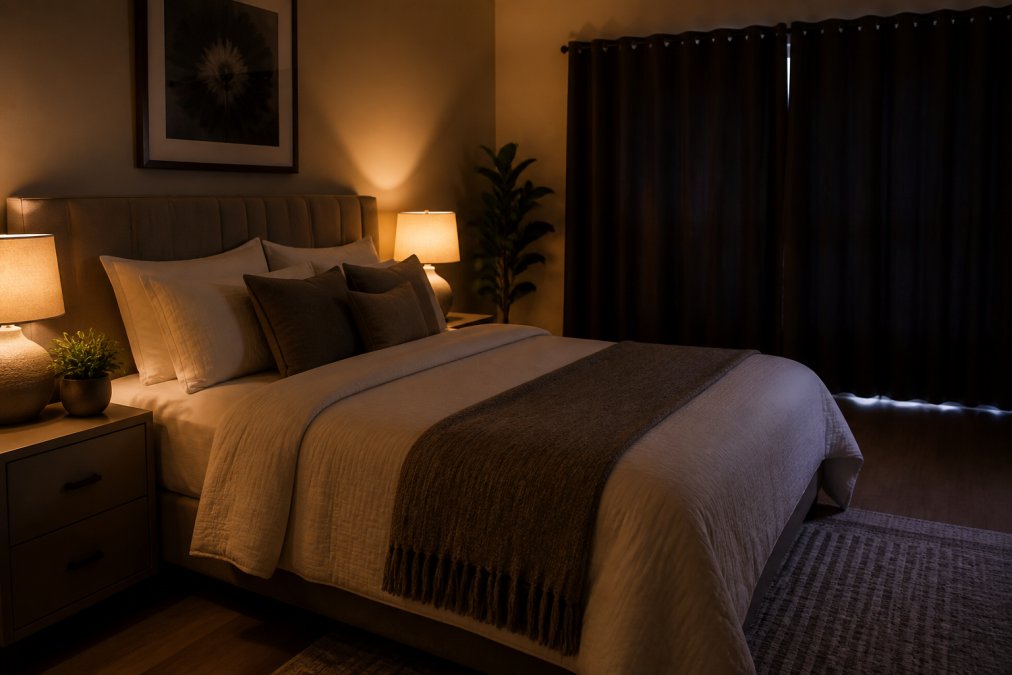
According to the National Sleep Foundation's sleep environment guidelines, a dark, quiet, and cool bedroom is consistently associated with better sleep quality and fewer nocturnal awakenings across all age groups.
Temperature, Air Quality, and Thermal Comfort
Your core body temperature needs to drop by one to two degrees Fahrenheit to initiate and maintain sleep. Sleep researchers recommend keeping your bedroom between 65 and 68 degrees Fahrenheit; most adults sleep best at the cooler end of that range.
Poor indoor air quality can trigger mild inflammation and nasal congestion that disrupts breathing during sleep. Practical fixes include opening a window for 15 minutes before bed, using a HEPA air purifier if you have allergies, keeping indoor plants like snake plants, and washing bedding weekly to reduce dust mites.
Noise, Darkness, and Sensory Optimization
Darkness is non-negotiable for melatonin production. Even low-level light from streetlights or electronics can suppress melatonin and reduce sleep depth. Blackout curtains are the most effective single investment most people can make.
For noise, consistent background sound like white noise or a fan often outperforms silence because it masks sudden sounds that trigger arousal.
Relaxation Techniques for Insomnia and Nighttime Stress
Relaxation techniques work by activating the parasympathetic nervous system, interrupting the stress response. When cortisol levels are elevated at bedtime, the body is in a state of alert incompatible with sleep.
The most evidence-supported options include: 4-7-8 breathing (inhale for 4 counts, hold for 7, exhale for 8); progressive muscle relaxation (systematically tense and release muscle groups); body scan meditation (a slow attention sweep from head to toe); and journaling (writing down tomorrow's tasks and worries before bed).
As documented in the American Academy of Sleep Medicine's clinical practice guidelines, cognitive behavioral therapy for insomnia (CBT-I) remains the most effective long-term treatment for chronic insomnia, using these same relaxation and thought-restructuring techniques.
Psychological Barriers to Sleep You May Be Overlooking
Sleep performance anxiety, the fear of not sleeping, creates a hyperarousal state that makes sleep impossible. The harder you try, the more awake you become. Other overlooked barriers include conditioned arousal (your brain has learned to associate the bed with wakefulness), catastrophizing sleep loss, and unprocessed emotional content that surfaces at night. Brief evening journaling can help process this before it disrupts sleep.
Natural Supplements and Sleep-Promoting Foods
Natural supplements work best as support for good sleep hygiene, not as replacement. The most commonly used and reasonably well-studied options include:
- Melatonin: Most effective for shifting sleep timing, particularly for jet lag or shift work. Lower doses (0.5 to 1 mg) are often as effective as higher doses.
- Magnesium glycinate: Magnesium deficiency is associated with muscle tension, restless sleep, and difficulty relaxing. This form is most easily absorbed and least likely to cause digestive upset.
- Valerian root: A traditional herbal remedy with mixed research results, but many find it helpful for reducing sleep latency.
- Chamomile: Contains apigenin, a compound that binds to GABA receptors and produces mild sedation. A cup 30 to 45 minutes before bed is a low-risk addition to any bedtime routine.
- Tart cherry juice: Contains naturally occurring melatonin and other sleep-supporting compounds. A small glass in the evening is one of the most practical food-based sleep interventions available.
According to the National Institutes of Health Office of Dietary Supplements, most sleep supplements are considered safe for short-term use, but consult a healthcare provider before adding any supplement if you take prescription medications.
| Supplement | Primary Benefit | Best Timing | Notes |
|---|---|---|---|
| Melatonin | Circadian rhythm adjustment | 30-60 min before bed | Low dose (0.5-1 mg) often sufficient |
| Magnesium glycinate | Muscle relaxation, sleep depth | With dinner or before bed | Addresses deficiency common in adults |
| Valerian root | Reduced sleep latency | 30-45 min before bed | Effects build over several weeks |
| Chamomile tea | Mild sedation, relaxation | 30-45 min before bed | Safe for most adults |
| Tart cherry juice | Melatonin support | Evening | Practical, food-based option |
Physical Activity, Age-Specific Adjustments, and Natural Ways to Improve Sleep Quality
Physical activity is one of the most reliable natural ways to improve sleep quality. Regular aerobic exercise increases slow-wave deep sleep and reduces sleep latency. Most adults see meaningful improvements with 150 minutes of moderate exercise per week, spread across most days.
Vigorous exercise within an hour of bedtime can delay sleep onset in some people, but morning or afternoon exercise consistently improves sleep. Even a 20-minute walk after dinner helps regulate blood sugar and cortisol in ways that support better nighttime rest.
Age-specific adjustments matter: adults over 50 should prioritize sleep consistency and manage pain that disrupts sleep; perimenopausal and menopausal women should cool the bedroom aggressively and use breathable bedding; younger adults and students benefit most from a consistent wake time to anchor the sleep-wake cycle.
How Long Does It Take to Fix Sleep Cycle Issues Naturally
Most people notice meaningful improvements in sleep quality within two to four weeks of consistently applying sleep hygiene best practices, particularly fixed wake times and light exposure management. For chronic insomnia, CBT-I typically runs six to eight weeks and produces durable improvements that medication does not.
A realistic timeline for common sleep issues:
- Mild sleep schedule disruption (jet lag, shift change): 5 to 10 days with consistent light exposure and fixed wake times
- Lifestyle-driven poor sleep quality: 2 to 4 weeks of consistent sleep hygiene changes
- Chronic insomnia: 6 to 8 weeks with structured behavioral intervention
- Magnesium or valerian supplementation: 2 to 4 weeks before evaluating effectiveness
Sleep restriction techniques, core to CBT-I, temporarily reduce time in bed to build sleep pressure. The short-term discomfort is real, but the long-term improvement is substantial.
Building a Bedtime Ritual That Supports Deep, Restorative Sleep
A bedtime ritual is a consistent sequence of calming activities in the 30 to 60 minutes before sleep that signals to your nervous system that the day is over. The consistency matters as much as the content. Your brain learns to associate the ritual with sleep onset, making the transition faster and smoother over time.

The most effective bedtime rituals move from stimulating to calm, bright to dim, engagement to disengagement. A practical framework:
- 60 minutes before bed: Dim household lights. Finish work or screen-based tasks. Set tomorrow's priorities in writing.
- 45 minutes before bed: Take a warm shower or bath. The subsequent drop in skin temperature mimics the body's natural pre-sleep cooling and accelerates sleep onset.
- 30 minutes before bed: Engage in a calming physical ritual like gentle stretching, reading a physical book, or applying a topical product that supports relaxation. The Healthy Embraces essential oil cream, formulated to encourage relaxation and help you unwind, fits naturally here as a tactile, sensory cue that the body associates with winding down.
- 15 minutes before bed: Dim reading light only. No screens. Breathing exercises or a brief body scan if the mind is still active.
The physical, sensory element of a bedtime routine is often underused. Touch-based rituals engage the parasympathetic nervous system directly and can meaningfully reduce the time it takes to feel genuinely sleepy.
According to the Harvard Medical School Division of Sleep Medicine's sleep hygiene resources, a consistent pre-sleep routine is one of the most practical and accessible tools for improving sleep quality without medication.
| Ritual Element | Timing Before Bed | Primary Benefit |
|---|---|---|
| Dimming lights | 60 minutes | Supports melatonin production |
| Warm shower or bath | 45 minutes | Triggers core temperature drop |
| Gentle stretching | 30 minutes | Releases muscle tension |
| Topical relaxation product | 30 minutes | Sensory cue, parasympathetic activation |
| Breathing exercises | 15 minutes | Reduces cortisol, lowers heart rate |
| Physical book reading | 15-30 minutes | Mental decompression without blue light |
The bedtime ritual is where natural ways to improve sleep quality become a lived practice. Done consistently, it's one of the most effective things you can do to support deep, restorative sleep night after night.
Poor sleep is one of the most common and most treatable problems people face, yet most solutions focus on quick fixes rather than addressing underlying patterns. Healthy Embraces supports the wind-down side of that equation with essential oil-based creams designed to encourage relaxation, calm muscle and joint tension, and help your body recognize that it's time to rest. If building a consistent, sensory-rich bedtime ritual is part of your approach to better sleep, explore how Healthy Embraces can become a natural part of that routine.
Frequently Asked Questions
What is the best natural thing to help you sleep?
No single remedy works for everyone, but a consistent sleep schedule is the most reliable starting point. Pairing that with reduced blue light exposure after dark, a cool bedroom, and a wind-down routine that includes relaxation techniques like deep breathing or progressive muscle relaxation covers the core factors that govern melatonin production and cortisol levels. Natural supplements such as magnesium, valerian root, or tart cherry juice can support these efforts, but they work best alongside strong sleep hygiene rather than as standalone fixes.
How long does it take to fix a sleep cycle naturally?
Most people notice meaningful improvement in sleep latency and nocturnal awakenings within two to four weeks of consistent habit changes. Resetting a significantly disrupted circadian rhythm, such as after shift work or prolonged jet lag, can take four to eight weeks of disciplined scheduling. The key variable is consistency: going to bed and waking at the same time every day, including weekends, is the single fastest way to stabilize your sleep-wake cycle without medication.
What vitamin or mineral am I lacking if I can't sleep at night?
Magnesium deficiency is the most commonly linked nutrient shortfall in adults with poor sleep quality. Magnesium supports the nervous system's ability to downregulate at night and is involved in melatonin synthesis. Low vitamin D levels have also been associated with disrupted sleep architecture and reduced deep sleep. Before adding any supplement, it is worth having bloodwork done, since true deficiencies respond well to targeted supplementation while healthy levels gain little benefit from extra doses.
Are herbal supplements safe for long-term sleep improvement?
Herbs like valerian root and chamomile have long safety records at standard doses and are generally well tolerated for ongoing use. That said, the FDA classifies most herbal sleep supplements as dietary supplements rather than drugs, meaning they are not subject to the same pre-market efficacy or safety testing. Anyone taking prescription medications, managing a chronic health condition, or pregnant should consult a healthcare provider before using herbal sleep aids regularly, as interactions are possible even with plant-based products.
What is the 3-3-3 rule for sleep?
The 3-3-3 rule is a practical pre-bed guideline: stop consuming caffeine at least 3 hours before bed, stop eating large meals 3 hours before bed, and stop vigorous exercise 3 hours before bed. Some versions extend the caffeine window to 6 hours to account for caffeine's half-life, which averages around 5 to 7 hours in most adults. The rule gives your body time to lower core temperature, stabilize cortisol levels, and begin the hormonal shift toward sleep without interference from stimulants, digestion, or elevated heart rate.
Can a topical cream or essential oil product actually help with sleep?
Topical products formulated with calming essential oils can support relaxation as part of a bedtime ritual. Scent has a direct pathway to the limbic system, the brain's emotional and arousal center, which is why lavender and similar botanicals are associated with reduced sleep latency in research settings. A cream applied as part of a consistent nightly routine also creates a behavioral cue that signals the brain to wind down, reinforcing the relaxation response over time. It works best alongside, not instead of, core sleep hygiene practices.
This article was written using GrandRanker